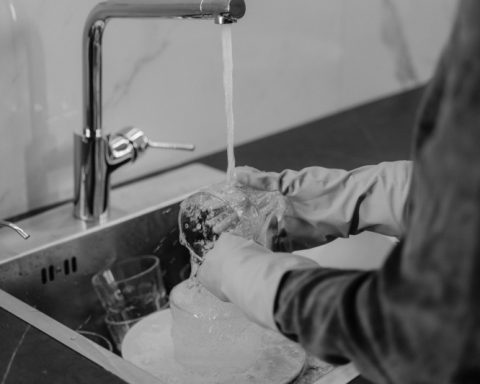


If you’ve ever asked, “Is a dishwasher worth it?” You’re not alone. Many households struggle when deciding whether using a dishwasher is truly more efficient, sustainable, and cost-effective than washing dishes by hand.
Conflicting advice, outdated assumptions, and daily habits frequently obscure a more pressing question: how to select a dishwashing method that benefits both your household and the environment. Many homeowners want to save water and energy and reduce their environmental impact without sacrificing practicality or hygiene.
This article compares manual dishwashing with modern dishwasher performance by examining water and energy use, hygiene, environmental impact, cost, and convenience, helping you weigh what truly makes a sustainable choice.
Read on to discover what’s best for your home.
Comparing dishwasher vs. handwashing efficiency
Before comparing numbers, consider why this distinction matters at all.
Dishwashing is a daily task that quietly influences your household’s water and energy use, and its overall environmental footprint. The way you clean dishes influences your utility bills, time, and mental load, and whether your routines are consistent with your sustainability values.
Modern households vary widely in how they wash dishes: faucet running, two-sink basins, occasional loads – and that influences water and energy use. When you compare consistent full loads in a modern dishwasher to typical handwashing, the numbers often favor the dishwasher.
Environmental and sustainability considerations
Using a dishwasher carefully — full loads, eco-mode, minimal pre-rinsing — often significantly reduces water and energy use. Some sources estimate that a dishwasher can save up to 50% of water and 28% of energy per cleaned item compared with typical handwashing.
Because dishwashers heat only the water they need (and often reuse water jets during a cycle), less energy is used to heat water than when a hot tap is continuously running for handwashing.
In regions where electricity comes from a cleaner energy mix, or if you use renewable energy, the environmental benefit becomes even stronger. That makes the question “Is a dishwasher sustainable?” more likely to be resolved in favor of the machine, especially for medium- to large-sized households.
That said, if you handwash carefully with a small basin of water, minimal rinsing, and avoid running the tap, you can dramatically reduce water and energy use. In those cases, especially for small households or infrequent dish loads, handwashing might rival a dishwasher in terms of sustainability.
Read more: Eco-Friendly Cleaning Methods for a Cleaner Home
Cost, convenience, and hygiene benefits
A significant advantage of owning a dishwasher is the long-term dishwasher cost trade-off. While the upfront cost (or repair cost) may seem steep, regular use often saves on water and energy bills over time, especially compared to heavy handwashing.
For busy households, perhaps parents, professionals, or anyone juggling many tasks, a dishwasher at home delivers consistent convenience. Instead of spending time scrubbing, rinsing, and drying dishes, you can load everything, start the cycle, and shift focus to other priorities. That time saving, though hard to quantify, adds real value to daily life.
A big plus in favor of dishwashers that’s often overlooked is their hygienic benefits. Dishwashers commonly heat water to high temperatures (sometimes 65–70°C or higher), which helps kill germs and bacteria more effectively than typical handwashing temperatures.
Read more: Finding Joy in Everyday Chores: The Art of Mindful Dishwashing
Practical ways to maximize dishwashing efficiency and sustainability
Making a dishwasher (or your handwashing routine) truly sustainable and cost-efficient depends on how thoughtfully you approach dishwashing. Here are practical guidance points, informed by research and real-world experience.
Optimize dishwasher usage
Using your dishwasher the right way makes a big difference for your household budget and environmental footprint.
Regular use of eco-modes and smart habits can shrink your utility bills, reduce water waste, and lower greenhouse gas emissions over time. In the European Union, stronger efficiency standards have cut dishwasher water use by up to 58% and electricity per cycle by about 34% compared with older models, delivering meaningful savings for both consumers and the planet.
Keep in mind some of the tips to optimize your dishwasher usage:
- Run full loads. The most significant waste of water or energy comes from using a half-empty dishwasher. Wait until the load is close to full to maximize dishwasher efficiency.
- Use eco-cycles or energy-efficient settings when possible. Eco cycles often use less water and lower temperatures, which reduces energy use while still cleaning effectively.
- Skip pre-rinsing (unless necessary). Many modern dishwashers are designed to handle food residue; pre-rinsing under a running tap wastes water and undercuts savings.
- Maintain the appliance. Regular maintenance, such as cleaning filters and checking spray arms, helps ensure optimal water flow and efficient cycles over the dishwasher’s lifespan.
- Avoid unnecessary drying cycles. Heated drying uses extra energy. Instead, allow dishes to air-dry if you can.
These habits improve dishwasher efficiency and reinforce the environmental case for a dishwasher.
Improve handwashing habits when a dishwasher isn’t available
Not every household has access to a dishwasher, and even those that do may handwash on occasion.
In those situations, how you wash dishes is more important than most people realize. Handwashing can quickly become water and energy-intensive, especially when hot water is used continuously, or dishes are cleaned one at a time.
If you handwash, consider the following practices.
- Use a washbasin and rinse basin setup. Fill one basin for washing and another for rinsing rather than letting the tap run continuously.
- Limit hot water. Use warm or cold water whenever possible; use hot water only when necessary for hygiene.
- Batch dishes. Instead of washing every small dish immediately, batch items together to minimize water use per item.
- Scrape food waste first. Discard leftover food into a bin before washing to reduce the need for excessive rinsing or pre-soaking.
With these habits, handwashing becomes far more water- and energy-efficient and may be the better choice for smaller households or occasional use.
Evaluate repair vs. replacement for older dishwashers
If you already own a dishwasher that’s older or performing poorly, it’s worth asking: Is it worth repairing, or is replacement the greener, more efficient option? Consider the following:
- Check the energy and water usage per cycle. If it uses significantly more than modern standards, replacement may pay off in the long term through lower utility bills and reduced waste.
- Evaluate frequency of use. If you only run it occasionally, the environmental and cost gains may be minimal.
- Factor in age and reliability. Older dishwashers may wear out, leak, or require frequent repairs, reducing their cost-effectiveness and sustainability.
- Look for newer models. Specifically, ones with energy-efficiency certification or high “dishwasher efficiency” ratings. These will maximize the benefits of a dishwasher at home for many years.
In short, if your existing dishwasher is inefficient or unreliable, replacement is often the more economical choice.
In conclusion
Whether a dishwasher is worthwhile depends on how you balance sustainability, efficiency, and everyday practicality. For many households, a modern dishwasher used thoughtfully can help with both environmental goals and daily routines. At the same time, mindful handwashing remains a viable option in smaller households or for occasional use.
The real takeaway isn’t that one method is always better; it’s that informed choices and intentional habits matter more than the method itself.
Ultimately, the question “Is a dishwasher worth it?” depends on your household’s size, habits, and values.
Use the insights here to make an informed, eco-conscious choice that fits your lifestyle, whether it means investing in a dishwasher or refining your manual dishwashing routine.
If you need more resources on dishwashing, check out the Household Management Science Labs. The lab uses the research of the Institute for Life Management Science to produce courses, certifications, podcasts, videos, and other tools. Visit the Household Management Science Labs today.

Photo by pvproductions on Freepik