

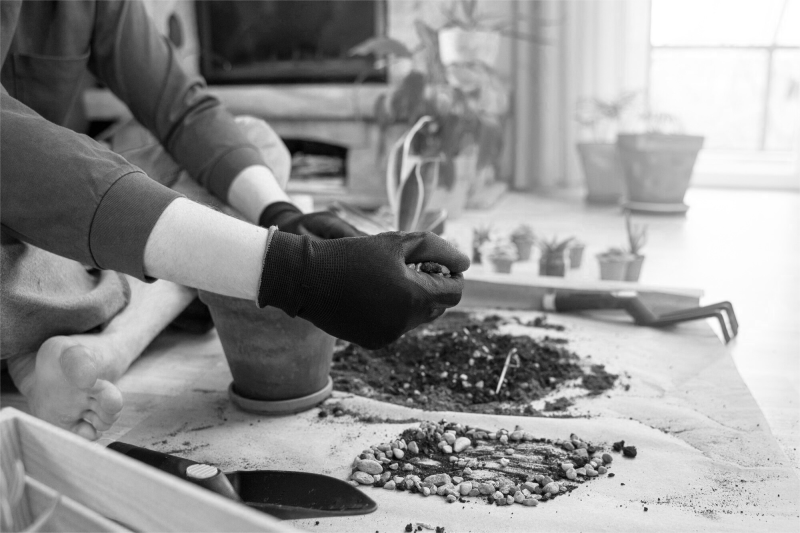
The soil in your home garden needs help. You might not know this, but it’s coping with chemicals, dry areas, and very little organic matter. It’s continuously responding to your carelessness at home. Everyday activities, such as using synthetic fertilizers for a “quick fix” or throwing food scraps away instead of allowing them to decompose naturally, quietly erode the soil that sustains your plants.
These behaviors can quickly lead to household soil pollution and have a knock-on effect on surrounding ecosystems. This article explains how to improve soil health at home by making simple shifts in routine that deliver significant environmental benefits.
You’ll learn how household decisions can contaminate your soil, and, more crucially, how simple it is to promote true soil stewardship. Whether you’re caring for a veggie patch, indoor pots, or a full backyard, you’ll find advice for both new and experienced gardeners, including how to improve soil quality for small-scale farming.
Consider this your friendly companion to sustainable home gardening. Keep on reading to understand more fun, practical, eco-friendly home ideas for regenerating and protecting your soil, all from the comfort of your own backyard.
Understanding soil health at home
Think of your garden soil as a secret underground city, complete with small animals, buzzing networks, and strong systems that all operate together. When the soil is healthy, it does more than merely support your plants. It functions as nature’s filter, sponge, and supermarket all in one.
More specifically, soil is a biological system. A teaspoon of good soil contains more microorganisms — bacteria, fungi, earthworms, insects, and even small viruses — than there are humans on Earth.
These small living forms do more than simply hang around; they also work. They decompose organic materials, recycle nutrients, build the soil, and provide just what plants require to grow. This live network is essential for soil stewardship because it keeps your soil continuously regenerating.
As a result, good soil promotes pure water. As water seeps through the soil, microorganisms and soil pores filter out contaminants, contributing to the purification of groundwater and neighboring streams. Furthermore, the wide diversity of life in the soil is critical for food growth: soils provide around 95% of our food, either directly or indirectly.
When the soil community is thriving, plants grow stronger and more nutritious, implying that your gardening or even small-scale sustainable home gardening becomes more productive and eco-friendly. Below are some important things to understand and learn about home soil.
How household habits harm soil
Okay, here’s where things get a little awkward: some of the “easy” home behaviors you believe are beneficial may really be harming your soil’s health.
Are you using excessive synthetic fertilizers and insecticides? Not good. Using pesticides has been shown in studies to hurt soil microbial processes, altering the nutrient cycle, and lowering the soil’s viability.
Even the things you do in your kitchen can affect your soil. Chemical dishwashers do not just evaporate after being rinsed; they may leak into the soil, disrupting the pH balance and harming the microscopic soil bacteria.
And then there’s compaction: if you walk over your lawn frequently (or use heavy garden equipment), the soil becomes compacted, making it difficult for water, air, and creatures to pass through.
Overwatering is also detrimental since it removes nutrients and drowns out fragile soil life.
Finally, improper food-waste composting harms the soil. Sending leftovers to the landfill means passing up the opportunity to restore precious organic matter to the ground—but just throwing “biodegradable” rubbish into the garden might be just as bad.
Food waste that is not composted correctly can attract pests, cause odors, disturb soil nitrogen balance, and even kill beneficial microbes. Composting first allows organic waste to decompose safely and evenly, transforming kitchen scraps into a stable, nutrient-rich material that enhances soil structure and fertility rather than degrading the environment.
The long-term effects of soil degradation
Here’s the truth: ignoring your soil today doesn’t simply harm your garden in the near term; it may have long-term effects that spill over into larger concerns like climate resilience and food security. When soil degrades, it loses essential nutrients and organic carbon.
Research data show that erosion (soil washed or blown away) depletes soil organic carbon reserves and significantly degrades soil structure. Without certain nutrients, plant development slows, and harvests of any vegetables or flowers you might plant are less vigorous.
Degraded soil also has a harder difficulty absorbing and retaining water, resulting in greater runoff, erosion, and less resistance when weather patterns change — a significant issue for climate resilience.
According to global statistics, approximately 33% of land is moderately to severely degraded due to compaction, chemical pollution, and erosion. Over time, this type of deterioration jeopardizes food security, as less fertile soil yields lower yields, and rebuilding these systems is far more difficult than safeguarding them initially.
Your household’s impact on soil health is important, not just for your backyard, but for the entire environment. Understanding these dynamics allows you to take efforts toward sustainable house tips and sustainable home tips that can have a significant impact.
Eco-friendly ways to improve soil health
Alright, it’s time to get your hands (or at least your green-thumbed brain) dirty in the best possible way.
Improving soil health isn’t magic; with the proper steps, you can transform your backyard soil into a healthy, living system that supports soil stewardship, sustainable home gardening, and the environment.
These home sustainability ideas aren’t only appealing; they’re also scientifically sound. Here are some things you can do:
Compost your food waste
Fancy turning that banana peel into dirt gold? That is exactly what composting accomplishes. Composting your kitchen scraps converts what would otherwise be waste into nutrient-rich organic matter, an effective way to enhance soil health at home.
Compost enriches soil organic matter, improving soil structure, aeration, and water retention.
The EPA emphasizes that compost application promotes soil porosity and reduces compaction, allowing soil to breathe and soak up rainfall.
Furthermore, compost helps close the loop: instead of sending food waste to landfills and contributing to methane emissions, you convert it into a resource that supports sustainable home gardening and reduces soil pollution.
On the microbial level, compost promotes the growth of beneficial bacteria, fungi, and other organisms. A study found that compost treatments significantly increased microbial biomass (bacteria and fungi) in soils. Compost also stabilizes and balances the C: N ratio in the soil, promoting long-term microbial activity, particularly in stressed soils.
How to compost at home (easy mode):
- Indoor. Use a tiny worm bin (vermicomposting) or a countertop compost “kitty litter” container to add fruit peels, eggshells, and coffee grounds. Make sure to throw in some dry leaves or shredded paper to keep things from becoming swampy.
- Outdoor. Create a basic pile or get a compost tumbler. To help balance moisture and accelerate decomposition, mix “green” resources (kitchen scraps, fresh grass clippings) with “brown” materials (dry leaves, small twigs).
Read more: Savor, Scrap, Soil: From Food Waste to Compost
Use mulch to protect and enrich the soil
Mulch is one of your most eco-friendly house suggestions. It’s any natural substance applied to the soil surface to protect it. It can be readily prepared at home from fallen leaves, straw, grass clippings, or wood chips, or purchased ready-to-use from a garden store. Mulching has significant benefits: it retains moisture, prevents erosion, and regulates temperature.
A thorough evaluation found that using organic mulch significantly reduces soil water loss by reducing evaporation.
In a field experiment, straw mulch significantly decreased soil erosion during simulated rainfall, demonstrating that mulch is an effective barrier against nutrient wash-off. Research has shown that mulching with straw or wood chips can increase soil water-holding capacity and promote infiltration, making your garden more robust and less water-stressed.
Here’s how to mulch like a pro:
- Use natural and biodegradable materials. Mulch is made from environmentally friendly materials, including leaves, straw, and wood chips. As it decomposes, it nourishes the soil and promotes soil management and sustainable home gardening.
- Apply mulch correctly. Spread a 5-10 cm layer around plants, keeping it away from branches and trunks to avoid rot. This helps to retain moisture, maintain the soil, and decrease home soil pollution.
- Refresh mulch regularly. Top up the mulch once or twice a year. As it decomposes, it nourishes the soil and promotes soil health.
Read more: Soil Conservation: Practical Ways Your Family Can Do
Replace chemicals with natural alternatives
If your concept of feeding your plants is a bright, manufactured fertilizer container, prepare for a plot twist. You can feed your plants at home, gently and effectively, using natural alternatives that do not contribute to soil contamination.
- Compost tea. Compost tea is essentially a great drink for the soil. Soak mature compost in water, then filter the liquid and use it to water your plants. It introduces nutrients and helpful bacteria into the soil.
- Worm castings. Worm castings are like little nutrition bombs. They promote soil structure and fertility without polluting, thanks to their high nitrogen, phosphorus, potassium, and microbial content.
- Natural pest control. To prevent pests, consider using natural pest management methods such as neem oil, insecticidal soaps, or companion planting (e.g., growing marigolds alongside tomatoes) to keep pests at bay safely and naturally.
Using these approaches reduces your reliance on chemical cleansers and fertilizers, a significant win for sustainable home practices, and eliminates housekeeping tasks that can harm your soil.
Grow native and resilient plants
It’s time to plant like a pro — but do it locally. Choosing native plants is one of the most eco-friendly decisions you can make for your soil and local fauna.
Native plants are adapted to your local climate and soil, so they typically require less water, fertilizer, and maintenance, boosting home sustainability. Because their roots are adapted to local conditions, these plants improve soil structure. Over time, they contribute to a stronger microbial community and more stable soil aggregates.
Growing native plants also supports biodiversity by providing food and habitat for pollinators, birds, and beneficial insects, strengthening your role in soil stewardship and lowering your household’s impact on soil health.
Support soil biodiversity
Here’s your backstage pass to the soil’s secret society: fostering a diverse population of worms, bacteria, fungi, and other microorganisms is critical for improving soil quality for farming (even on a small scale) and minimizing residential soil contamination.
No-till or low-till gardening preserves the delicate networks of fungus and microorganisms. A 2024 study found that no-till farming, when paired with crop diversification, significantly increased soil bacterial diversity and microbial health.
Research in Laos found that no-till and cover cropping increased soil structure and microbial abundance compared with traditional tillage. This highlights how smart gardening may reverse soil pollution. Practice mixed planting or intercropping: cultivating a variety of plants together nourishes a broader diversity of soil organisms, keeping your soil ecology healthy and active.
By doing so, you are taking action on eco-friendly house ideas to support the restoration and maintenance of living soil.
In conclusion
The soil around your home feels every decision you make. Every day home activities, even those that appear innocent, can subtly tip the balance between a healthy soil ecosystem and soil pollution.
Actions that promote soil stewardship, such as composting waste, stacking mulch, cultivating robust native plants, or being careful with chemical use, have a cascading impact that enhances your backyard ecosystem and supports sustainable home gardening. Pick one change this week and watch the magic happen.
Whether you create a compost bin, avoid artificial fertilizers, or cover your garden with a comfortable mulch blanket, each step brings you closer to better soil, plants, and a healthy world. Your hands, decisions, and care are effective instruments for improving soil health right at home.
If you want to see more resources on soil/land conservation, check out the Household Management Science Labs. The lab uses the research of the Institute for Life Management Science to produce courses, certifications, podcasts, videos, and other tools. Visit the Household Management Science Labs today.

Photo by Freepik